
White box v/s Black box algorithm explained
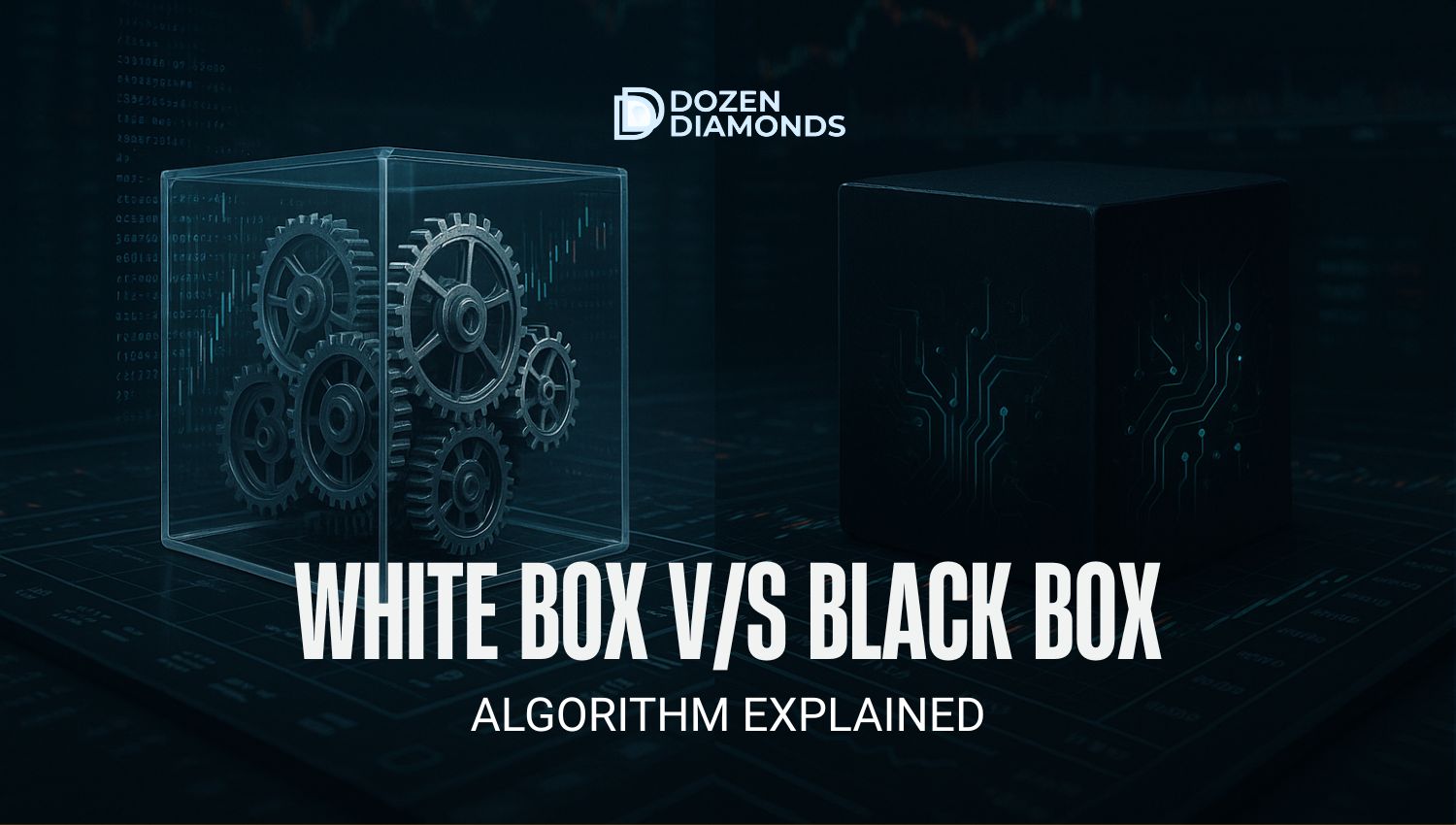
Table of Contents
Introduction
After reading this article on White box v/s Black box algorithm, you’ll clearly understand which approach suits your trading style—and how SEBI’s guidelines impact both.
You’ll gain:
- Straightforward clarity on risk and transparency differences
- SEBI requirements for each algorithm type
- Actionable guidance to choose and implement the right algo
Reader Promise
You’ll know exactly which white box v/s black box algorithm style fits your portfolio and complies with SEBI.
We’ve included broker APIs screenshots and tagging logs proving successful exchange approvals.
This means you can:
- Validate transparent setups step-by-step
- Avoid black-box compliance pitfalls
- Align strategies with SEBI’s RA licensing and documentation standards
Three Key Benefits
- Clear transparency vs competitive edge – choose what’s right for you
- Compliance confidence – SEBI rules simplified for retail
- Risk control – understand failure modes and safety checks
What is White box v/s Black box algorithm?
White box v/s Black box algorithm compares two approaches in automated trading:
- White box: transparent logic, fully understood, easily audited
- Black box: proprietary, hidden logic with potential opacity and higher risk
White Box Algorithms Explained
- Definition: Fully transparent algorithms with clear, rule-based structures.
- How It Works: Traders set explicit rules
- Use Cases: Retail traders, brokers, and institutions using algo trading platforms
- Advantages:
- Easy to audit, understand, and modify
- SEBI/exchange-approved via simple registration
- Safer for retail adoption
- Disadvantages:
- Easily replicated, modest competitive edge
Black Box Algorithms Explained
- Definition: Proprietary algorithms with hidden logic—typically used by HFTs or hedge funds.
- How It Works: Trading decisions are opaque, based on complex models or machine learning.
- Use Cases: HFT firms, proprietary desks, institutional quant strategies.
- Advantages:
- Unique edge, high-profit potential
- Disadvantages:
- Requires SEBI Research Analyst (RA) license, detailed reporting
- Limited control for user, higher systemic risk
- Error potential with unexpected outcomes
Comparative Table: Pros & Cons
| No | Feature | White Box Algorithm | Black Box Algorithm |
|---|---|---|---|
| 1 | Transparency | Fully open | Hidden, proprietary |
| 2 | SEBI Compliance | Trade logic & ID registration | RA license & logic reports |
| 3 | Risk Level | Low/moderate | High |
| 4 | Competitive Edge | Low (easily replicated) | High (unique logic) |
| 5 | Use Cases | Retail & simple institutional use | HFT, hedge funds, complex quant |
| 6 | Flexibility | Easy to modify | Rigid (requires re-registration) |
Next-Step Call to Action
Curious which algorithm suits your trading style?
Download the Kosh App and experience fully transparent white box algo based trading
❓ FAQs on White box v/s Black box algorithm
Q1. What is the main difference between a White Box and a Black Box algorithm?
A White Box algorithm is fully transparent, meaning traders can see and understand every rule, logic, and execution step. In contrast, a Black Box algorithm hides its internal logic, often using complex or proprietary models that are not visible to users.
Q2. Which algorithm type is more suitable for retail traders under SEBI guidelines?
White Box algorithms are ideal for retail traders. They are easier to audit, modify, and register with exchanges under SEBI’s simplified approval process—no Research Analyst (RA) license is required for transparent setups.
Q3. Why do Black Box algorithms require an RA license from SEBI?
Because Black Box algorithms use hidden or proprietary logic, SEBI mandates RA licensing and detailed logic reports to ensure compliance, accountability, and investor protection.
Q4. What are the risks of using a Black Box algorithm for individual traders?
Black Box algorithms carry higher risks due to limited visibility, possible over-optimization, and unexpected outcomes. Traders can’t intervene or audit logic easily, making it harder to control losses or diagnose failures.
Q5. How can I experience a compliant and transparent White Box algo trading setup?
You can explore SEBI-compliant White Box algo setups through the Kosh App, which provides transparent logic visibility, risk control, and simple exchange registration—ideal for retail traders seeking safe automation.