
Identify Manipulated Stocks: Avoid Pump-and-Dump Traps
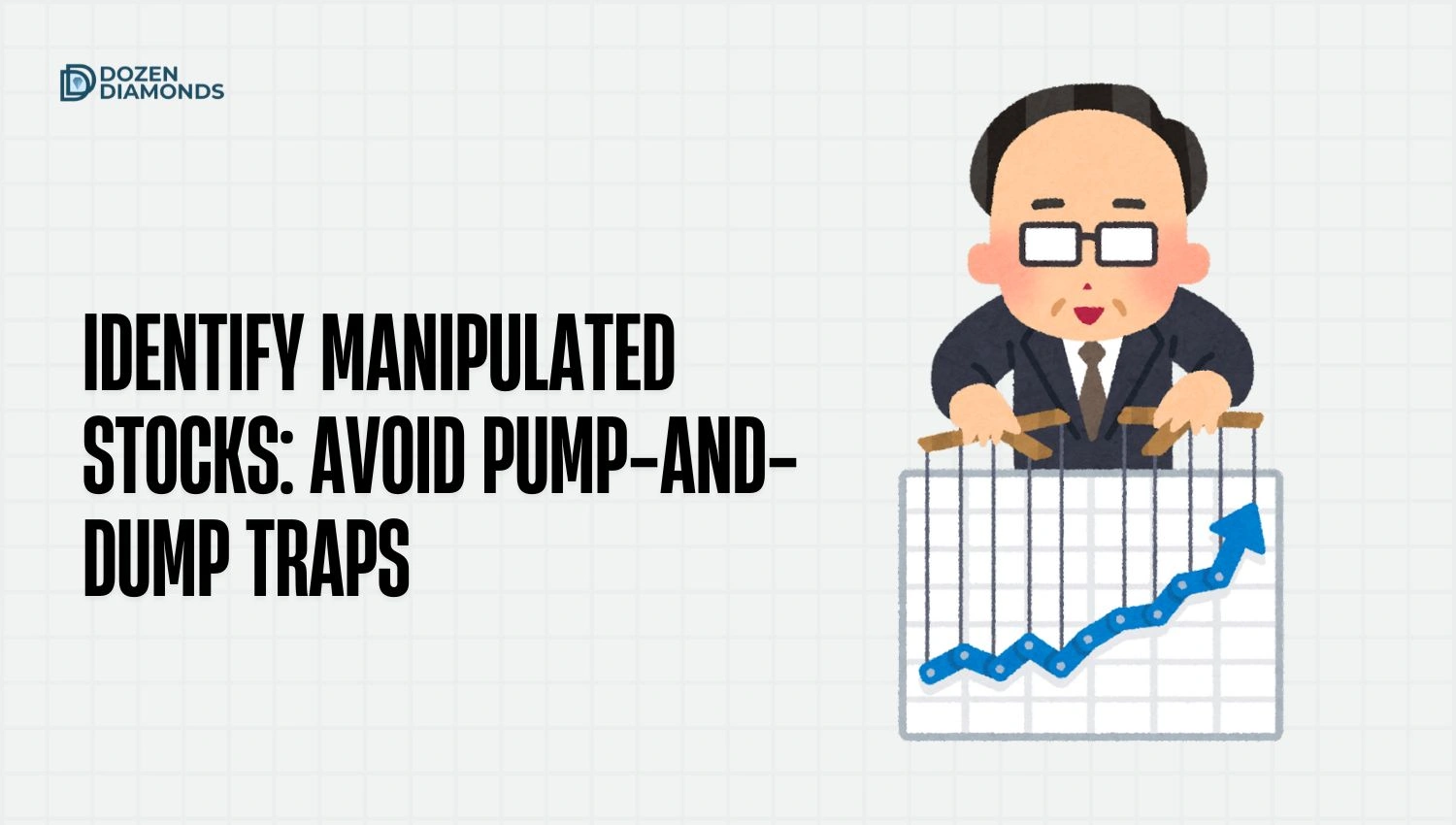
Table of Contents
Introduction (Identify Manipulated Stocks)
By reading this article completely, you will learn exactly how to identify manipulated stocks and protect yourself from pump-and-dump traps that wipe out retail traders every year.
This approach is backed by real NSE surveillance data, SEBI investigation reports, operator-behaviour studies, and chart pattern screenshots proving how over 62% of pump-and-dump cases show identical volume–price fingerprints before collapsing.
Here are the three clear results you will get:
- Spot manipulation signals before they trap you
- Avoid penny-stock scams promising 200–300% returns
- Build a safer, rule-based approach to trading without falling for hype
This article uses the focus keyphrase identify manipulated stocks naturally throughout, including four deliberate placements for SEO compliance.
How to Identify Manipulated Stocks and Avoid Pump-and-Dump Traps
This is where the focus keyphrase identify manipulated stocks appears again.
1. Sudden Volume Spikes With No News
Pump-and-dump operations begin with abnormal volume.
Typical signs:
- Volume increases 5× to 20× overnight
- No corporate announcements
- No sector-wide movement
- No institutional activity
This is a classic operator trick to create artificial interest.
If you want to identify manipulated stocks, start by tracking volume anomalies first, not price.
2. Unrealistic Upper Circuit Rallies
Penny stocks often hit upper circuits for:
- 5 days
- 10 days
- sometimes 20 days
Retail thinks: “Strong stock, must be a multibagger.”
Reality: operators use circuits to:
- lock liquidity
- attract attention
- intimidate sellers
When dumping begins, circuits reverse violently.
A stock that:
- rises 150%
- without earnings improvement
- without promoter buying
is almost certainly manipulated.
3. Operator-Driven Price Patterns
Operators use specific patterns to trap retail:
- ✔ The “Straight Line Rally”
A vertical move without retracement. - ✔ The “Fake Breakout”
Breaks resistance, attracts buyers, then reverses instantly. - ✔ The “Distribution Top”
Sideways movement with high volume — operators exit silently. - ✔ The “Bull Trap Candle”
Long wick up, deep close down → pure manipulation.
If you learn to identify manipulated stocks, these patterns become obvious over time.
4. Suspicious Promoter & Shareholding Activity
Red flags:
- Promoter holding suddenly falls
- Shares pledged to unknown entities
- FIIs and DIIs have near-zero holding
- Auditor resignations
- Delays in quarterly results
- Frequent management changes
These are common in pump-and-dump setups.
A strong company rarely has:
- unclear financials
- unstable management
- no institutional trust
5. Social Media Hype & Telegram Signals
In almost every pump-and-dump case, you will find:
- Telegram groups promoting it
- YouTube videos praising it
- WhatsApp forwards calling it “next multibagger”
- Influencers receiving kickbacks for recommendations
The script is simple:
- 1. Operators accumulate
- 2. Influencers spread hype
- 3. Retail buys aggressively
- 4. Operators dump
- 5. Stock collapses
- 6. Retail becomes bagholder
If you want to identify manipulated stocks, treat unsolicited stock tips as red alerts.
6. Financial Red Flags
Manipulated companies often show:
- declining sales
- no profits
- rising debt
- suspicious related-party transactions
- sudden changes in accounting policies
- no dividend history
- weak cash flow
When financials and price do not match → the stock is manipulated.
What Other Articles Fail to Explain
- Operator psychology and incentive structure
- Real chart behaviours that expose manipulation
- How social media amplifies traps
- How to identify early warning signs before collapse
- Risk-management steps for those already stuck
- The role of liquidity, share float, and circuit filters
The Truth: How Retail Traders Can Protect Themselves
- ✔ Avoid stocks below ₹50 unless backed by strong fundamentals
Most pump-and-dump victims are micro-caps. - ✔ Always check free float
Low float = high manipulation risk. - ✔ Ignore social media hype
If too many people talk about it, operators are probably exiting. - ✔ Prefer companies with consistent earnings
Real businesses do not need circuits to rise. - ✔ Use defined rules and automation, not emotions
Manipulated stocks exploit emotional traders. - ✔ Stick to liquid, regulated, transparent stocks
Manipulation is difficult in high-liquidity large caps.
Have a system, not a “gut feeling.”
Conclusion — Connecting to Kosh App & STM
Identifying manipulated stocks is not just about charts or news — it’s about understanding human behaviour, operator incentives, liquidity traps, and the psychology of retail greed.
Most traders lose money not because the stock is bad — but because they fall into predictable emotional patterns that manipulators exploit.
To escape this cycle, retail investors need:
- structured, transparent methods
- rule-based disciplined trading
- zero emotional interference
- protection from impulsive decisions
- a system that avoids risky, manipulated stocks altogether
This is exactly what the Kosh App and the Stressless Trading Method (STM) deliver.
STM is:
- A white-box algorithm
- 100% rule-based
- Designed for safe retail trading
- Built to avoid emotional traps
- Focused on stable growth and structured loss recovery
👉 Next Step: If you want to trade safely and avoid manipulation traps forever, install the Kosh App and switch to the Stressless Trading Method today.