The Stressless Trading Method vs Mutual Funds

The Grand Finale : The Stressless Trading Method vs Mutual Funds Which is better for retail investors?

Some say Mutual Funds will always dominate because professional management and diversification feel safer.
Others argue the Stressless Trading Method (STM) is the future—rule-based, transparent, and designed for controlled recovery rather than blind hope.
And now—we’re stepping into one of the most anticipated clashes of this debate competition.
🔥 The Grand Finale is coming 27th January 2026 at 7:00 PM a high-stakes showdown between the Instructor Team vs Product Development Team, with both teams battling to win the debate.
👉 Join the Stressless Wealth Community

✨ Highlights from Previous Rounds:

White-box vs Black-box Algorithms

1️⃣3️⃣ White-box vs Black-box Algorithms: Which Will Survive Widespread Market Adoption?

The high-stakes debate, “White-box vs Black-box Algorithms: Which Will Survive Widespread Market Adoption?”, sparked deep thinking and sharp arguments within the Dozen Diamonds community on 23rd December at 7 PM. The Instructor Team delivered a compelling case grounded in transparency, risk control, and real-market behaviour, ultimately winning the debate against the Customer Service Team. It wasn’t just a discussion on algorithms—it was a decisive showdown between explainability and opacity, reaffirming that in the long run, clarity and structure shape sustainable trading success.

Banning Target-Price

1️⃣2️⃣ Will Banning Target-Price and Stop-Loss Tips Help or Hurt the Market?

The debate sparked intense discussion across the Dozen Diamonds community, with the Customer Service Team defeating the Marketing Team through sharper logic and clearer market insight.

Reducing Brokerage Charges

1️⃣1️⃣ Will Reducing Brokerage Charges Hurt or Help the Brokers?

The high-stakes debate, “Will Reducing Brokerage Charges Hurt or Help the Brokers?” ignited powerful discussions within the Dozen Diamonds community on 9th December 2025.
The Product Development Team delivered a sharp, data-backed performance, outmanoeuvring the Instructor Team with clarity, conviction, and strategic insight into brokerage economics. And in this intense intellectual showdown, the Product Development Team emerged victorious, securing their place in the grand finale.

Ideas and Innovation or Knowledge and Resume

🔟 Ideas & Innovation vs Knowledge & Resume

The debate “Ideas & Innovation vs Knowledge & Resume” sparked sharp insights within the Dozen Diamonds community on 25th November 2025. The Customer Service Team emerged victorious, using Ideas & Innovation to outshine the Sales Team’s resume & knowledge-focused arguments. A concise yet powerful clash — proving that real-world understanding often wins when performance truly matters.

Manufacturing Sector

9️⃣ Can the Manufacturing Sector in India Become Stronger?

On 18th November 2025 at 7:00 PM IST, the Product Development Team won the debate against the Marketing Team by taking a strong stand against the topic: Can the Manufacturing Sector in India Become Stronger?

Their victory underscored a critical message: India’s manufacturing rise needs deeper reform before true strength can emerge.

Indian Economy Suffering Because of Its Fixation on Gold

8️⃣ Is the Indian Economy Suffering Because of Its Fixation on Gold?

The debate on “Is the Indian Economy Suffering Because of Its Fixation on Gold?” lit up the Dozen Diamonds stage on 11th November 2025. The Instructor Team, arguing that the Indian economy is not suffering because of its fixation on gold, emerged victorious with compelling arguments against the notion.
Kudos to both teams for a golden debate that truly sparkled!

My Country or Myself

7️⃣ Am I Working for My Country or Myself?

The debate “Am I Working for My Country or Myself?” on 4th November 2025 sparked powerful perspectives at Dozen Diamonds.
The Customer Service Team passionately stood for national purpose, while the Product Development Team argued for self-driven growth.
After a gripping exchange, the Customer Service Team triumphed over Product Development Team.
A thought-provoking win celebrating purpose, pride, and passion!

Optimism vs Pessimism

6️⃣ Optimism vs Pessimism — What Works?

The electrifying debate, “Optimism vs Pessimism — What Works?”, lit up the Dozen Diamonds community on 28th October 2025. In this high-intensity face-off, the Marketing Team (Deep Roy & Rutuja Kamble) clashed with the Instructor Team (Nishant Upadhyay & Rahul Singh) in what was dubbed “The Finals Before the Semifinals.”
Both sides delivered sharp reasoning, psychological insights, and real-market parallels — balancing logic with emotion, and research with experience.
The result? A perfect tie.
A fitting outcome for a debate where both optimism and pessimism proved essential forces in the stock market investment

Is following trends alway successful?

5️⃣ Is following trends alway successful?

The debate “Is Following Trends Always Successful?”, held on 14th October 2025, sparked a dynamic exchange of logic, foresight, and strategy at Dozen Diamonds. The Product Development Team, led by Sumit Gautam and Sohel Yunus, challenged the comfort of conformity with powerful arguments on innovation and independent thinking — ultimately outsmarting the Sales Team. Their win highlighted a powerful truth: success doesn’t come from following every trend, but from knowing when to break away and create your own.

Is the stock market a casino?

4️⃣ Is the stock market a casino?

The fiery debate “Is the Stock Market a Casino?”, held on 7th October 2025, saw sharp wit and deep market insights collide at Dozen Diamonds. The Marketing Team, represented by Ishika Pola and Vaibhavi Pai, powerfully dismantled myths equating the stock market to mere chance, arguing instead for knowledge, discipline, and data-driven investing. Their compelling reasoning and confident delivery earned them victory over the Customer Service Team, proving that understanding the market isn’t gambling — it’s strategy with purpose.

Can every small idea become a big idea?

3️⃣ Can every small idea become a big idea?

The thought-provoking debate “Can Every Small Idea Become a Big Idea?” held on 30th September 2025, turned into a battle of innovation versus execution at Dozen Diamonds. The Instructor Team, represented by Abhinav Panchal and Nishant Upadhyay, captivated the audience with their sharp reasoning and real-world analogies, ultimately outshining the Product Development Team. Their victory highlighted one timeless truth — big ideas aren’t born overnight; they’re built on clarity, conviction, and the courage to think differently.

Algo trading vs Discretionary trading

2️⃣ Algo trading vs Discretionary trading

The debate “Algo Trading vs Discretionary Trading” on 23rd September 2025 set the Dozen Diamonds stage ablaze with data-driven arguments and strategic insights. The Marketing Team, led by Deep Roy and Rutuja Kamble, impressed the audience with their analytical depth and mastery of automation logic — ultimately outclassing the Sales Team in both precision and persuasion. This round wasn’t just about trading styles; it was about the future of smart investing — and the Marketing Team proved they had their pulse on it.

Does technical analysis really work?

1️⃣ Does Technical Analysis Really Work?

The high-stakes debate, “Does Technical Analysis Really Work?”, brought intellectual fireworks to the Dozen Diamonds community on 16th September 2025. The Instructor Team represented by Vinay Ghavghave and Rahul Singh, showcased sharp logic and real-market insights to outwit the Customer Service Team, delivering a masterclass in practical trading wisdom. It wasn’t just a debate — it was a clash of experience vs. perception, proving once again that skillful reasoning always wins in the world of trading.

🏆 The Scoreboard Update
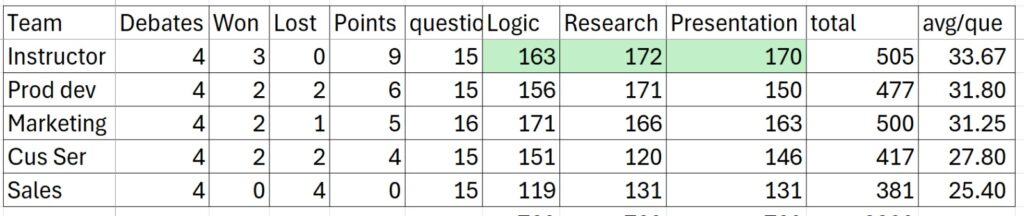
Scoreboard Update

Join us to witness an evening of compelling arguments, sharp wit, and powerful insights that go beyond the debate floor.

👉 Join the Stressless Wealth Community

Scroll to Top

Debate Narrative:

Will Banning all tips based on Target Prices and Stop loss help or hurt the Market?

By - Rahul Singh

Introduction: What I Believed Before This Debate

Before engaging with this debate, my view on tips based on target prices and stop-loss levels was largely pragmatic and utility-driven.

I believed tips were not inherently harmful. In a market where retail participation is rising faster than financial literacy, tips felt like a functional shortcut. A way for under-informed participants to anchor decisions, manage risk, and participate without having to fully understand balance sheets, market structure, or behavioural finance. Target prices gave direction. Stop-losses gave the illusion of discipline. Together, they appeared to reduce chaos.

From my background in equity research and algo-based systems, I also saw tips as a surface-level expression of deeper analysis. Even flawed advice, I assumed, was better than random trading. If a tip included a defined entry, target, and stop-loss, it at least imposed a framework. Structure felt superior to impulse.

I also believed the market could self-correct. Bad tips would lose credibility. Good analysts would survive. Participants would learn over time. Regulation, in my mind, needed to focus on fraud and misrepresentation, not on banning formats of advice altogether.

At a deeper level, I assumed responsibility still rested with the investor. Tips were inputs, not commands. If someone blindly followed them, that was a literacy problem, not a market design problem.

In short, my belief was this: banning target-price and stop-loss-based tips would infantilize the market. It would remove a learning scaffold before replacing it with genuine understanding. I saw tips as a crutch, yes, but a temporary one. Not something that fundamentally damaged market quality.

The debate forced me to test this assumption rather than accept it, following the same stress-test logic I had applied earlier in a different context

Moderator: Setting the Context for the Debate

The moderator began by framing the debate around a behavioural reality rather than a technical market rule.

The topic for the day was whether banning tips based on target prices and stop-loss levels would help or hurt the market. The starting point was an observation about Indian decision-making patterns. Indians, by nature, tend to externalize responsibility. Direction is often sought from outside authorities. This tendency appears across religion, health, and finance, and the stock market is no exception.

In markets, this behaviour shows up as a constant search for tips. Investors look for someone else to tell them what to buy, where to enter, where to exit, and when to book profits or losses. Tips from newspapers, television experts, social media, and perceived specialists carry significant influence because they promise direction and certainty.

The moderator challenged the assumption behind this behaviour.

In reality, no one knows where the market is headed at any given moment. Regardless of experience, education, or analysis, the market is ultimately driven by entrepreneurial decisions, changing business models, shifting incentives, and unexpected pivots in the economy. Study improves understanding, not foresight.

Despite this uncertainty, tip-based trading has become deeply embedded in Indian market culture. Target prices and stop-losses, in particular, have a strong impact on how participants make financial decisions. They appear precise, authoritative, and actionable, even though the future they claim to describe is inherently unknowable.

This is why the debate exists.

The question is not whether advice itself is good or bad. The question is whether tips framed as fixed targets and stop-losses genuinely help investors make better decisions, or whether they distort behaviour by transferring responsibility away from the individual.

With this context, the debate was set between two sides.

  • The Marketing Team argued against the topic, that banning all tips based on target prices and stop-losses would hurt the market.
  • The Customer Service Team argued for the topic, that banning all tips based on target prices and stop-losses would help the market.
Q1. What are the primary motivations behind the practice of using target prices and stoploss orders in trading?
Marketing Team

The Marketing Team began by isolating target prices, not as tips, but as analytical benchmarks.

Marketing Team
Marketing Team

They referenced earnings insight reports where analysts publish 12-month target prices derived from company fundamentals rather than short-term market noise. These studies, conducted on the S&P 500, compare two elements: projected target prices and actual index movements. When plotted together using line and bar charts, the relationship shows that target prices act as a structured reference point. They do not predict exact outcomes, but they help investors frame upside, downside, and risk-reward in advance. This structure, the team argued, reduces emotionally driven trading decisions.

To test whether structure changes behaviour, the team moved to experimental evidence.

Marketing Team

They cited a controlled experiment conducted by the University of Konstanz examining the disposition effect. The disposition effect refers to a well-documented bias where investors sell winning positions too early while holding losing positions too long.

The experiment divided participants into three groups:
  • A no-limit group with no target prices or stop-losses
  • A limit group with predefined target prices and stop-losses
  • A reminder group with soft cues but no strict exit rules

The cumulative distribution graph of disposition effect values showed a clear pattern. The solid line representing the no-limit group shifted to the right, indicating higher disposition effect values and more emotional mistakes. The dashed line representing the group with target prices and stop-losses shifted sharply to the left, showing significantly lower disposition effects. The dotted reminder group sat between the two.

The visual evidence suggested a direct relationship: predefined exits materially reduced emotional bias. The improvement did not come from market conditions, but from rule-based decision-making.

This conclusion was reinforced by another figure comparing disposition effects under identical market movements. Most data points fell below the 45-degree line, showing that the disposition effect with targets was consistently lower than without targets, even when prices behaved exactly the same. The rule, not the market, drove the improvement.

Marketing Team

The team then examined outcome behaviour through PLR and PWR metrics. PLR, the proportion of losses realized, increased, indicating that traders were more willing to book losses when necessary. PWR, the proportion of winners realized, remained stable, meaning profitable positions were still allowed to run. Together, this showed that target prices and stop-losses created balanced exit behaviour rather than premature profit booking.

To extend the argument beyond retail behaviour, the Marketing Team cited institutional evidence.

Marketing Team

JP Morgan applied a 5 percent stop-loss overlay to the Carhart momentum strategy. The results were structural, not marginal. Annual returns increased from 4.6 percent to 8.8 percent. The Sharpe ratio improved from 0.27 to 0.64. Maximum drawdown reduced sharply from minus 57.6 percent to minus 25.8 percent. These results demonstrated how stop-loss rules cut tail risk and compress drawdowns without eliminating upside.

JP Morgan’s multi-asset tests across equities, bonds, commodities, and foreign exchange showed similar outcomes. Stop-loss overlays consistently reduced drawdowns across asset classes.

The Marketing Team’s underlying claim was clear.

Target prices and stop-losses are not predictions. They are behavioural control systems. They counter emotional trading, enforce discipline, pre-plan decisions, reduce drawdowns, protect capital, anchor expectations, increase consistency, and promote more stable market behaviour. From this perspective, banning such structures would remove one of the few tools proven to mitigate human bias rather than amplify it.

Customer Service Team

Primary motivators behind the practice of using target prices and sell orders.

Marketing Team

To understand this, the Customer Service Team divided participants into two segments. The first segment is the people who give advice. The second segment is the people who accept it. Without separating these two, the motivation behind target price and stop-loss practices cannot be understood.

The first group consists of advisers or sell-side analysts. This includes recommendations coming from credible platforms, registered research analysts, and also tips circulating on social media platforms like Instagram where influencers talk about what to buy and what to sell.

The second group is the users. Common people like you and me who accept these recommendations.

Marketing Team

The team referred to a recommendation published in the Times of India to explain the practice. The key question raised was why advisers give recommendations. The primary motivation highlighted was an increase in volatility and trading activity.

There are proven studies and data showing that analyst recommendations increase trading volume by 25 percent to 35 percent in the three days following the release. Whenever a buy, sell, or hold recommendation is issued, that stock trades more actively than usual. Links to these studies were provided, and the findings are consistent across sources.

Marketing Team
To demonstrate this in the Indian context, the team analyzed the stock that was most recommended by brokerages over the past year, which was Bajaj Finance. Data was collected from multiple brokerages, and post-recommendation price and volume behaviour was examined. Bloomberg data showed a sharp increase in trading activity immediately after a buy call was issued.
Target Prices and Stop loss

The second motivation discussed was brokerage revenue. Higher trading volume directly increases brokerage income. Client engagement rises, transaction volumes increase, and this eventually results in higher brokerage earnings. These patterns have been validated by multiple studies.

The team then referred to commission trends using U.S. data, since similar long-term data is difficult to obtain in India. Over the years, commission lines have consistently declined. As commissions fall, the incentive to increase transaction volume becomes stronger.

Another behavioural pattern highlighted was that investors increasingly follow analysts rather than funds. If an analyst moves to another firm, investors tend to shift capital along with that analyst. This pattern has been observed in India as well.

Target Prices and Stop loss

The team also cited an internal case study conducted earlier. There was a practice where recommendation screenshots were shared frequently. Around 10 to 15 days before the debate, all this data was collected and analyzed. The performance of the suggested stop-losses and target prices was evaluated. Company names were removed, and only individual names were used. The analysis showed that most of the recommendations did not perform well over the given time period. Giving a recommendation did not mean it was going to be correct. The primary outcome was increased trading activity.

Finally, the team addressed user motivation. New users often lack clarity on what to do and how to do it. There is limited access to analytical tools, valuation models, and investing frameworks. This lack of understanding is the reason users rely on target prices and stop-loss practices.

Q2. How do Target Prices and Stop-Loss orders affect market volatility and investor behaviour?
Marketing Team

The Marketing Team began by using aggregate market data to explain how target prices influence expectations.

Target Prices and Stop-Loss orders
They referred to FactSet index-level aggregate data that shows bottom-up target prices for the S&P 500. According to the team, these targets form a shared expectation corridor. When the index trades below this corridor, investors perceive undervaluation. When it trades above the corridor, investors expect mean reversion. The chart comparing the actual index level with the target price corridor was used to show that target prices stabilize expectations rather than amplify noise. The team stated that this leads to more data-driven decisions and softens long-term sentiment-driven volatility, as supported by behavioural finance evidence.
Target Prices and Stop-Loss orders
The team then revisited behavioural bias, specifically the disposition effect. They explained that the disposition effect is the tendency of traders without predefined targets to sell winners too early and hold losing positions for too long. To support this, they cited research from the University of Konstanz. The scatter plot presented compared disposition effect values with and without target prices and stop-losses. Most of the data points lay below the 45-degree line. This showed that even under identical price movements, investors using target prices and stop-losses had lower disposition effect scores. The team emphasized that the discipline came from the rule itself, not from market conditions.
Target Prices and Stop-Loss orders
Next, the team discussed how target price revisions contribute to price discovery. They referred to a study based on 4,198 target price revisions in Taiwan. Tables and cumulative trading charts were shown to demonstrate measurable changes in net buying and selling around revision announcements. Upward revisions resulted in net buying, while downward revisions resulted in net selling. The team stated that this evidence shows target price revisions carry information content and guide price discovery rather than creating chaotic volatility. Any volatility impact observed was short-term and information-driven.
Target Prices and Stop-Loss orders

The discussion then moved to stop-loss orders and tail risk. The team cited a JP Morgan study that applied a 5 percent stop-loss overlay to the Carhart momentum factor. The data table showed that maximum drawdown reduced from minus 57.6 percent to minus 25.8 percent, while the Sharpe ratio improved from 0.27 to 2.64. The equity curve became significantly smoother. The team used this to demonstrate that stop-loss orders materially reduce tail risk volatility, leading to fewer forced liquidations, fewer volatility shock events, and more stable long-term returns.

The team returned again to experimental evidence from the University of Konstanz. They explained that traders with predefined exits showed significantly lower disposition effects, more balanced gain-loss realization, and less hold-and-hope behaviour. This directly reduced panic exits and emotional behaviour, which the team identified as major contributors to retail-driven volatility.

Target Prices and Stop-Loss orders

Finally, the team referred to a real-world dataset from the United Kingdom covering 65,233 round-trip positions. The study showed that traders using stop-losses avoided large loss clusters and exhibited lower behavioural volatility spans.

The Marketing Team concluded that target prices provide structure and anchor expectations, smoothing long-term sentiment fluctuations, while stop-loss orders protect capital, reduce drawdowns, and lower tail risk volatility. Together, they argued, target prices create expectation stability and stop-losses create risk stability, leading to more disciplined and less volatile market behaviour.

Customer Service Team

The Customer Service Team began by explaining why target price and stop-loss–based tips harm the market.

They stated that when a target price or stop-loss tip is broadcast to thousands of traders, a predictable pattern emerges. Everyone enters at the same price. Everyone books profit at the same target. Everyone exits at the same stop-loss. This is not natural market movement. It is synchronized human reaction. Synchronized reactions create artificial volatility. Instead of thinking, people react. Instead of research, they follow instructions. Discipline weakens and emotions intensify.

Target Prices and Stop-Loss orders
The team then presented a case study titled Impact of Target Prices on Equity Volatility. In 2022, Han and his team studied what happens when analysts publish new target prices in equity markets. The findings showed that the moment a target price is announced, the stock jumps sharply. Trading activity surges and volatility spikes within minutes. However, the price movement does not sustain. Within days or weeks, prices drift back down. The team emphasized that this spike was not driven by fundamentals. It was driven by emotion. Target prices created excitement, noise, and short-term mispricing that the market later corrected.
Target Prices and Stop-Loss orders

Next, the team cited a study titled Stop-Loss Orders and Forced Selling in Equity Markets. Richard and his team analyzed thousands of equity traders and found that stop-losses often trigger during normal price fluctuations. A stock dips slightly, hits the stop-loss, forces the trader out at a loss, and then recovers shortly after. The study showed that stop-loss–based tips do not consistently protect retail traders. Instead, they often push traders into avoidable losses.

The discussion then shifted to Indian market evidence.

The team referred to the Avadhut Sathe case, where lakhs of traders acted on identical target prices and stop-loss calls. This created herd behaviour and artificial price movements. The team highlighted that this was a direct example of the volatility being discussed.

They then referenced the Hyderabad case, which demonstrated behavioural damage. When traders blindly follow fixed target prices and stop-loss levels, rational thinking declines and impulsive, high-risk decisions increase.

The team also pointed to SEBI’s crackdown on WhatsApp and Telegram tip groups. SEBI findings confirmed that mass target price and stop-loss tips cause artificial price movements and repeated retail losses. Both volatility distortion and behavioural damage were visible in real Indian market conditions.

Target Prices and Stop-Loss orders

The team then supported their argument with behavioural finance research. Barber and Odean’s research showed that overconfident traders trade excessively and lose money. Target prices feed this overconfidence. When an analyst says a stock will reach a specific number, investors assume it must happen. A 2024 attention study showed that bold numbers like target prices immediately capture attention, and attention spikes lead to impulsive decisions.

They also referred to prospect theory, which explains that losses hurt roughly twice as much as gains feel good. When a stop-loss is triggered, the pain often leads to loss-chasing behaviour and emotional re-entry into trades.

Target Prices and Stop-Loss orders
SEBI enforcement findings were then highlighted. SEBI reports showed that most actions were taken against unregistered tip providers, and almost all of them used target price and stop-loss–based tips. SEBI found that these tips are used to herd retail investors, making their actions predictable. Predictable investors are easier to exploit. The team highlighted that around 92 percent of traders following such calls lost money, and approximately 97 percent of SEBI actions involved tip providers using target prices and stop-losses.
Target Prices and Stop-Loss orders

The team then explained why banning such tips would help the market. Removing mass-broadcast target price and stop-loss tips would reduce artificial volatility and herd reactions. It would reduce emotional trading, protect small investors from manipulation, and push participants toward research instead of shortcuts. The team clarified that tools are not being banned. What is being banned is the mass misuse of these tools through broadcast tips that misguide and herd retail investors.

The Customer Service Team concluded that target price and stop-loss–based tips may appear harmless, but research evidence, real market data, behavioural studies, and SEBI findings all point in the same direction. These tips mislead retail investors, increase volatility, and weaken market stability. A safe and mature equity market is built on research, not on mass-distributed WhatsApp or Telegram tips.

Q3. Would banning tips based on target prices and stop loss lead to greater market stability or increased speculation?
Marketing Team

The Marketing Team began by stating their core position clearly. Any form of banning tends to backfire. Instead of reducing speculation, it pushes traders into riskier zones and ultimately increases speculative behaviour.

They then used global evidence to support this claim.

Target Prices and Stop-Loss orders

The team first referred to the 2008 U.S. short-selling ban. Research by Boehmer, Jones, and Zhang documented a 77 percent collapse in short selling following the ban. Liquidity worsened, and there was no improvement in market stability. The team emphasized that speculation did not disappear. Transparency did.

They then moved to Europe. A global review conducted by European Securities and Markets Authority found that similar bans increased volatility and damaged price discovery. The European Systemic Risk Board also found that banned bank stocks faced higher default risk. The team’s message was direct. Restrictions reduced transparency rather than risk.

Next, the team discussed regulatory displacement effects.

Target Prices and Stop-Loss orders

When ESMA introduced leverage caps in 2018, brokers rapidly shifted clients to offshore jurisdictions. The same pattern was observed in warnings issued by Australian Securities and Investments Commission, which cautioned that retail traders would migrate to unregulated offshore brokers. This migration was later documented in the UK by the Financial Conduct Authority, which recorded approximately €75 million in retail losses from offshore CFD schemes following these regulatory shifts.

The inference drawn by the team was consistent. When regulated advice or access is restricted, traders do not stop trading. They migrate toward higher-risk and less regulated alternatives.

The team then applied this pattern to tip-based advice.

Target Prices and Stop-Loss orders

When regulated guidance disappears, traders move toward social media tip channels. These channels operate very differently from regulated advisors. There is no risk framework, no accountability, and aggressive promotion dominates. The team stressed that this was not theoretical.

They cited documented cases from the U.S. where around $100 million pump-and-dump schemes were run through Discord and Twitter, with eight influencers charged. In India, Securities and Exchange Board of India banned more than 50 entities for YouTube-based stock manipulation.

Target Prices and Stop-Loss orders

The team added further evidence from research by Hamrick, which recorded 952 Discord pump schemes and 246 Telegram pump schemes within a six-month period. The data showed that unregulated channels scale rapidly when regulated channels are restricted.

The conclusion presented by the Marketing Team followed a clear global pattern.

Banning actionable tools like target prices and stop-losses does not eliminate speculation. It displaces it. Speculation moves from transparent, regulated environments to opaque, unregulated ones. The result is not stability, but higher risk, lower accountability, and greater harm to retail participants.

Their final assertion was direct. Across markets and jurisdictions, bans reduce visibility, not behaviour. When regulated entities are silenced, unregulated channels become the primary source of guidance, and those channels are built for speculation, not stability.

Customer Service Team

The Customer Service Team began by defining what market stability actually means.

Target Prices and Stop-Loss orders

Stability was described as a market condition where prices move within a controlled range, without sharp spikes or crashes. A stable market reflects balanced participation, rational decision-making, and smooth price discovery. According to the team, three elements must exist for a market to be considered stable: low volatility, rational decision-making, and accurate price discovery. These elements emerge when traders act independently. When decisions are driven by mass tips, price movements become artificial and erratic, weakening all three pillars of stability.

The team then addressed whether tips materially affect markets.

Target Prices and Stop-Loss orders

Survey data was presented to show how deeply external recommendations shape investor behaviour. Personal contacts, influencers, and digital peer groups dominate as information sources, with around 62 percent of investors basing decisions on social media recommendations. A single tip can rapidly influence a large pool of traders.

The team then explained how tips affect volatility.

Target Prices and Stop-Loss orders

When traders follow target price tips, herding behaviour emerges. People buy at the same price and sell at the same price. This coordinated behaviour creates crowd trades, and coordinated crowd trades generate volatility. This was framed as market mathematics, not opinion. Research on coordinated agents shows that a single external cue can trigger waves of buying or selling, creating volatility clusters.

A graph showing returns in a herding economy was used to illustrate this effect. The graph displayed large upward spikes followed by sudden crashes, highlighting an environment driven by exaggerated crowd reactions. These irregular fluctuations demonstrated how reliance on shared tips produces unstable outcomes.

In contrast, a second graph showing returns in a non-herding economy represented a healthier market structure. Returns were smoother, movements were moderate, and extreme spikes were rare. This pattern emerged when decisions were independent and diversified.

The team then discussed how rational decision-making is affected.

Target Prices and Stop-Loss orders

Target price tips encourage traders to outsource judgment and ignore fundamentals. When decisions rely on someone else’s prediction, thinking becomes reactive rather than analytical. Research by Barber and Odean was cited, showing that traders who depend on public signals tend to overtrade and perform poorly. This loss of rationality feeds volatility and weakens market quality.

The team then turned to international regulatory evidence.

Global regulatory experience shows a consistent pattern. When authorities crack down on tip-driven schemes, manipulation decreases and market integrity improves. Australia reduced social media pump-and-dump activity. The UK lowered boiler room scams. China curbed micro-cap manipulation. India reduced SMS-based tip fraud. Historically, regulatory action against tip-based schemes has aligned with improved market stability.

Indian market evidence was then presented.
Target Prices and Stop-Loss orders

Securities and Exchange Board of India’s crackdown on high-profile pump-and-dump schemes via social media tips in January 2022 was cited as a signal of enforcement seriousness. This action likely deterred at least some unregistered, tip-based trading strategies. The India VIX trend was referenced to show how volatility peaked around 2020 to 2021 and began declining from 2022 onward. While multiple factors influenced this decline, the timing aligned with SEBI’s action against coordinated tip-based speculation.

The team concluded by summarizing research findings.

Target Prices and Stop-Loss orders

Informational cascades form when people follow public signals. Herd-driven trading leads to underperformance. Pump-and-dump activity arises from shared tips. Certain signals create volatility spikes. Together, these findings show that tips amplify noise and destabilize prices, while independent decision-making strengthens market structure.

Q4. Could banning target price and stop-loss tips reduce or increase the risk of manipulation in the market?
Marketing Team

The Marketing Team argued that bans generally backfire.

Target Prices and Stop-Loss orders

While regulators believe banning numeric tips removes misleading signals, the team stated that the real issue is displacement. When regulated target price and stop-loss guidance is restricted, traders do not stop seeking direction. They move to unregulated channels.

Global evidence supports this. Studies and regulatory reviews show that restrictions such as short-selling bans reduced transparency and worsened liquidity without improving stability. Similar displacement occurred when leverage caps were introduced, pushing traders toward offshore and unregulated platforms.

The team highlighted that social media tip channels are already proven manipulation hubs. Pump-and-dump schemes on Discord, Telegram, YouTube, and Twitter have been repeatedly documented, including cases acted upon by Securities and Exchange Board of India. When regulated guidance disappears, these channels become the primary source of advice.

The conclusion was clear.

Banning target price and stop-loss tips does not reduce speculation. It shifts it from transparent, regulated environments to opaque, unregulated ones, increasing manipulation risk and weakening market stability.

Customer Service Team

The Customer Service Team argued that banning target price and stop-loss–based tips directly reduces market manipulation.

Target Prices and Stop-Loss orders

They explained that modern manipulation largely operates through mass-broadcast tips. Tip providers accumulate positions first, then circulate target prices and stop-loss levels through Telegram, WhatsApp, YouTube, and other platforms. Retail investors act together, prices move artificially, and manipulators exit, leaving losses behind.

The team highlighted that such tips provide two things manipulators need: coordination and predictability. When thousands of traders enter and exit at the same levels, herd behaviour and artificial volatility are created.

They cited repeated enforcement actions by Securities and Exchange Board of India, which show that most pump-and-dump cases involve unregistered tipsters using target prices and stop-loss calls. The Avadhut Sathe case was referenced as a clear example where mass-broadcast tips distorted prices and investor behaviour.

The team clarified that the issue is not the tools themselves. The issue is mass broadcasting of these tools. When target prices and stop-losses are pushed at scale, especially in small- and mid-cap stocks, they create liquidity traps, false momentum, and mispricing.

Their conclusion was direct.

Banning mass-distributed target price and stop-loss tips removes a key manipulation channel. It reduces herd behaviour, limits artificial volatility, protects retail investors, and improves price discovery. A safer and fairer market is built on research and independent judgment, not on viral numeric tips.

Conclusion: What Changed for Me After the Debate

This debate was not about stop-losses or target prices. It was about tips.

That distinction matters, and this is where the Marketing Team went off track. Across all four questions, they defended stop-losses and target prices as tools. They showed how rules reduce bias, anchor expectations, and improve outcomes in structured or institutional settings. None of that was wrong. But it was not the question being asked.

The debate was about what happens when these numbers are broadcast as tips and followed by thousands of traders at the same time.

By focusing on tools instead of tip-based behaviour, the Marketing Team missed the core issue. Herding, synchronized entry and exit, incentive misalignment, and artificial volatility were largely left unaddressed. Their arguments validated the usefulness of stop-losses and targets, not the safety of tip-driven markets.

The Customer Service Team stayed closer to the topic. They focused on crowd behaviour, real Indian cases, regulatory actions, and how tips convert tools into instructions that replace thinking.

But my understanding, however, remains largely the same as when I started.

I still believe target-price and stop-loss–based tips are not inherently damaging. In a market where participation outpaces understanding, they act as provisional structure. They offer direction, impose a basic framework, and are objectively better than trading driven purely by impulse or noise.

What the debate confirmed is the limit of their usefulness. Tips can support thinking, but they cannot replace it. Responsibility does not transfer with a number. When investors treat tips as commands rather than inputs, the failure is behavioural, not structural. That was my belief before the debate, and it remains my belief now.

Debate Narrative:

Can the Manufacturing Sector in India Become Stronger?

By - Rahul Singh

Introduction: What I Believed Before This Debate

Before working on this article and watching the debate, my view on India’s manufacturing sector was largely shaped by visible progress and headline indicators.

I believed the core manufacturing problem in India was being steadily solved. Roads were expanding, ports were faster, digital payments were world-class, and policies like Make in India and PLI appeared to be doing their job. Rising production numbers, growing exports, strong FDI inflows, and sector-specific success stories in electronics, autos, and pharma suggested that India was on a clear upward manufacturing trajectory.

In simple terms, I assumed that once infrastructure, capital, and policy alignment were in place, manufacturing strength would follow naturally. The gaps with China or Vietnam felt like a matter of time, scale, and persistence rather than structure. Manufacturing growth, in my mind, was already underway and largely irreversible.

The debate forced me to test this assumption rather than accept it.

The following debate served as the stress test — a live internal exchange at Dozen Diamonds where optimism was forced to confront structure.

What followed was a structured breakdown of a Dozen Diamonds internal debate that forced this assumption to be tested rather than accepted. Dozen Diamonds hosted a debate between the Marketing Team and the Product Development Team on a question that cuts through policy slogans and headline optimism:

Can India realistically become a stronger manufacturing economy?

The moderator set the context clearly. India contributes roughly 4-5% of global manufacturing output. China contributes 24-25%. If India aims to leapfrog economically, manufacturing strength is not optional. It is foundational.

The debate was not about optimism versus pessimism. It was about how progress is measured.
  • The Marketing Team argued for the topic, that India can become stronger in manufacturing.
  • The Product Development Team argued against the topic, that India cannot realistically become stronger in manufacturing.
Question 1 – Is India’s current infrastructure both physical and digital robust enough to support a globally competitive manufacturing and financial ecosystem?
Can the Manufacturing Sector in India Become Stronger?
Marketing Team: Measuring Progress

The Marketing Team grounded its argument in absolute expansion.

India’s physical infrastructure has scaled rapidly:

  • National highways expanded by ~60%, from 91,287 km (2014) to 1,46,195 km.
  • High-speed corridors grew from 93 km to 2,474 km.
  • Four-lane and above highways increased from 18,278 km to 45,947 km.

Ports showed measurable efficiency gains:

  • Cargo handling crossed 817 million tonnes.
  • Average ship turnaround time fell from 93.59 hours to 48.06 hours.
  • Container turnaround stands at 22.57 hours.
  • Cargo volume rose from 819 million tonnes to 855 million tonnes between FY23-24 and FY24-25.

Digital infrastructure reinforced this base:

  • Internet connections rose from 25.15 crore to 96.96 crore.
  • 4.74 lakh 5G towers now cover 99.6% of districts.
  • UPI processed 1,867 crore transactions worth ₹24.77 lakh crore in April 2025 alone.
  • India accounts for nearly 50 percent of global real-time digital payments.

India’s Logistics Performance Index rank improved to 38, reflecting gains in customs, tracking, and timeliness.

Their underlying claim:
Modern manufacturing depends on both physical and digital rails, and India has built both at national scale.

Can the Manufacturing Sector in India Become Stronger?
Product Development Team: Measuring Friction

The Product Team did not dispute expansion. They questioned operational effectiveness.

  • Only 43% of national highways are four-lane.
  • Average freight speeds remain 30-40 km/h, compared to 80-90 km/h in China.
  • Dedicated Freight Corridors are only 58 percent operational.
  • Port efficiency lags. Mundra ranks 44th globally. JNPT vessel stays remain 40-48 hours, versus 10-12 hours in Singapore.
  • Power reliability, land acquisition delays, and clearance timelines continue to raise industrial costs.
  • Digital strength is concentrated in consumer platforms, not industrial automation, IoT, or predictive logistics.

The Underlying argument:
Infrastructure strength is defined by throughput and reliability, not by kilometers built or volume handled. Speed gaps and operational friction negate scale.

Question takeaway: India’s infrastructure base is materially stronger than a decade ago. But gaps in speed, reliability, and integration still constrain global manufacturing competitiveness.

Question 2 – Can India realistically challenge China or Vietnam as a global manufacturing hub or is it better positioned as a as a service-led economy?
Can the Manufacturing Sector in India Become Stronger?
Marketing Team: Measuring Momentum

The Marketing Team acknowledged the gap:

  • Manufacturing is 12.5% of India’s GDP, versus 26% in China and 24.4% in Vietnam.

But they focused on direction:

  • Manufacturing GVA rose from ₹21.9 lakh crore to ₹24.6 lakh crore in FY23-24.
  • Electronics production grew 71.85% in three years.
  • Auto components grew over 80%.
  • Manufacturing exports form 67.1% of merchandise exports.
  • FDI inflows rose sharply, touching $81 billion in FY24-25.

Their framing was clear:
India is not replicating China path. It is scaling selectively in electronics, pharma, auto components, and textiles.

Can the Manufacturing Sector in India Become Stronger?
Product Development Team: Measuring Distance

The Product Team focused on long-term structural signals.

  • Manufacturing GDP share has stayed between 12-14 percent for 20 years.
  • China and Vietnam crossed 24% and sustained it.
  • India’s share of global manufacturing exports sits near 1.8%, flat over time.
  • China commands 14% of global manufacturing exports.

Economic complexity widened the gap:

  • China: 1.15
  • India: 0.4

Domestic value addition:

  • China: 68%
  • Vietnam: 55%
  • India: 37%

Workforce structure reinforced the pattern:

  • Manufacturing workforce share: India ~12%, China/Vietnam ~27-30%.
  • Formally skilled manufacturing labour in India: ~2.5%.

FDI composition confirmed it:

  • Manufacturing receives ~7% of India’s FDI, versus 30-40% in China and Vietnam.

Their Driving Logic was:
True manufacturing hubs reveal themselves through sustained GDP share, export dominance, workforce absorption, and economic complexity not isolated sectoral growth.

Question takeaway: India is expanding manufacturing output, but its economic structure still tilts toward services.

Question 3 – Have government initiatives such as “Make in India” and “Atmanirbhar Bharat” delivered tangible results, or are they more aspirational slogans?
Can the Manufacturing Sector in India Become Stronger?
Marketing Team: Measuring Outcomes

The Marketing Team highlighted:

  • $81 billion in FDI inflows.
  • ₹21,500 crore in PLI disbursements, paid only after production targets.
  • Manufacturing GVA growth to ₹24.6 lakh crore.
  • Manufactured goods forming 67.1% of merchandise exports.

Their argument:
Capital flows respond to real opportunity, not slogans.

Can the Manufacturing Sector in India Become Stronger?
Product Development Team: Measuring Dependence

The Product Team reframed success as import reduction.

  • Electronics imports doubled from $37B to ~$78B.
  • Solar equipment remains 85% China-dependent.
  • 70% of APIs are imported.
  • Semiconductors remain fully imported.

Smartphones illustrate the issue:

  • India assembles at scale.
  • Domestic value addition remains 12-15%.

PLI outcomes:

  • Output increased.
  • Domestic component depth did not.

Manufacturing’s GDP share declined from ~16% (1990s) to 12.5% today.
Vietnam moved in the opposite direction.

Their claim was:
Self-reliance is measured by falling import dependence and rising domestic value addition, not by higher production or incentive disbursement.

Question takeaway: Make in India expanded activity, not yet capability depth.

Question 4 – Is India prepared for the Fourth Industrial Revolution automation, AI, and green manufacturing or will it face job displacement and inequality?
Can the Manufacturing Sector in India Become Stronger?
Marketing Team: Measuring Alignment

They pointed to:

  • 35% of Indian firms expecting AI-driven transformation.
  • National AI missions and industrial policy alignment.
  • AI’s potential to add $85-100 billion to manufacturing by 2035.
  • Logistics cost reduction potential of 10-15%.
  • Large-scale reskilling initiatives acknowledging future needs.

Their view:
Recognition plus investment equals preparedness.

Can the Manufacturing Sector in India Become Stronger?
Product Development Team: Measuring Capability

They focused on execution capacity.

  • Robot density: 4 per 10,000 workers (China: 246, Korea: 1000+).
  • R&D spend: 0.7% of GDP (China: 2.4%).
  • Formally skilled workforce: ~2%.
  • MSMEs dominate manufacturing but lack capital for automation.
  • Port turnaround times remain 60-70 hours.

Assembly-heavy sectors dominate value chains, leaving them vulnerable to automation shocks.

Their Underlying view was:
Industry 4.0 readiness depends on automation density, R&D depth, skilled labour, and MSME capital strength. Without these, technology adoption increases inequality instead of productivity

Question takeaway: India is moving toward Industry 4.0, but from a shallow base.

Conclusion: How My Thinking Changed After the Debate

After watching the debate and breaking down both sides, my understanding of India’s manufacturing challenge became sharper and more uncomfortable.

I no longer see India’s manufacturing issue as a problem of intent, spending, or visibility. Those exist. What is missing is conversion.

The debate clarified a crucial distinction: expansion is not the same as strength. India has built roads, ports, policies, incentives, and digital rails, but these inputs are not yet converting reliably into speed, depth, and domestic capability. Manufacturing success is not measured by kilometers built, money disbursed, or units assembled. It is measured by throughput, value addition, workforce absorption, export dominance, and reduced import dependence.

The Marketing Team showed that India is constructing the outer shell of a manufacturing economy. The Product Development Team showed that the inner engine is still weak.

What changed for me is this realization: manufacturing power is revealed only when capital turns into capacity quickly, imports fall because domestic firms are genuinely competitive, automation raises productivity without hollowing out jobs, and factories absorb labour at scale with rising value addition. Until that happens consistently, growth remains surface-level.

India is participating in global manufacturing. It is not yet shaping it. The journey has clearly begun. The transformation is still incomplete.

Debate Narrative:

Is the Indian Economy Suffering Because of Its Fixation on Gold?

By - Abhinav Panchal

Dozen Diamonds had a debate between Instructor Team (me representing the instructor team), and Sales Team on the topic ‘Is Indian economy suffering because of its fixation on gold?’ The debate began with the moderator introducing the topic: India’s relationship with gold, our cultural obsession with it, and whether this obsession harms the economy or supports it. Gold, he reminded us, is seen as a solid and traditional investment, but it often blocks the flow of cash within the country. The sales team would speak for the topic, and my team — the instructor team — would speak against it. My view before the debate was crystal clear that the economy is suffering and is continue to suffer because of gold because money invested in gold is silently killing the amount should be invested in the stock market which can help the GDP to grow.

The first question was: “To what extent does India’s gold consumption impact its current account deficit and overall economic stability?

Indian Economy Suffering

The instructor team began by explaining the current account deficit and calculating gold imports as around 1.3% of India’s GDP. They argued that this showed gold was not an economic burden, but an economic buffer. They highlighted that gold forms only about 8% of India’s total imports, while oil and electronics dominate. Comparing Q1 and Q2 of 2024 with 2025, they claimed there was no direct link between gold imports and the current account deficit. Even if gold imports touched 1.5% of GDP, they said, the category was too small to destabilize a $4 trillion economy.

Indian Economy Suffering

Their opposing team argued the opposite — that gold consumption aligned with the worst periods of India’s current account deficit in 2011–2013 and again in 2020–2023. According to them, rising gold imports weakened the rupee, drained foreign exchange, and created economic pressure while contributing little to exports or job creation.

When my turn came, I agreed that gold imports rose during those periods, but I emphasized that blaming gold alone oversimplified the issue. Oil shocks and policy paralysis were the bigger causes at the time. Indians turned to gold because of high inflation and a falling rupee — gold was the symptom, not the disease. After macroeconomic fundamentals improved post-2024, gold demand remained strong, yet the current account deficit came under control. That showed gold was not the villain. I concluded that blaming gold for the -5% deficit in those years was like blaming a thermometer for a fever.

The opposing team insisted the debate should only focus on gold, not other economic elements. They said since I acknowledged gold was part of the issue, that was enough to prove their point.

Question 2: “How do gold imports influence inflation and foreign exchange reserves?”

The sales team explained that India pays for gold in US dollars, causing dollar outflow and weakening the rupee. A weaker rupee makes imports like oil and electronics costlier, pushing inflation up and forcing the RBI to use foreign exchange reserves. They used data from 2011 to 2024 to argue that India’s dependency on imported gold keeps this cycle going. According to them, rising gold imports thin out reserves and increase economic vulnerability.

I countered by saying gold does not destroy savings — it stores them. Household savings in gold are wealth, not loss. Gold is considered “unproductive” only because it is outside formal systems. Rural India uses gold as collateral for loans, which supports small businesses and agriculture. Gold-related industries also employ millions, especially artisans and workers in smaller enterprises.

Their team replied that while gold helps households, it still drains foreign exchange and raises inflation nationally. Another member from our side questioned whether they had concrete data showing rupee depreciation directly after gold imports. They admitted they did not. We pointed out that in RBI reserves, gold is only 14.6%, while overall dollar outflow affects the economy far more. They responded that government policies like Sovereign Gold Bonds exist because the government knows gold’s importance and wants people to shift away from physical gold.

Question 3: “What role does gold play in household savings, and how does it impact financial inclusion?”

The instructor team answered by pointing out that Indian households hold around 28,000 tons of gold — more than many countries. Gold acts as an alternative financial tool, especially for low-income and rural families. For many women, gold is one of the few assets they directly control, and gold loans often give them their first access to formal credit. Gold loans help those without credit histories enter the system.

The opposing team argued that while gold is emotional security, it weakens the economy by trapping wealth in lockers. They said storing savings in gold slows financial inclusion and keeps people away from digital payments, bank accounts, and other formal services.

When I responded, I focused on the temporary nature of any rupee pressure caused by gold imports. If gold truly caused long-term rupee weakness, the rupee would crash every wedding season, which it does not. Major factors like oil prices matter far more. I questioned how gold could promote financial inclusion if it was locked in home lockers. Gold loans, I said, are short-term emergency loans; they said that gold loans do not build long-term credit history or financial literacy. I replied that gold loans form a large industry because of demand, not goodwill, and that lenders ultimately want collateral, not to empower borrowers.

Question 4: “Are policies aimed at reducing gold imports effective, or do they drive smuggling?”
Indian Economy Suffering

The sales team presented data showing that higher import duties consistently led to higher smuggling: 100 tons in 2018, 120 tons in 2020, and 160 tons in 2023. They said high duties only reduce legal imports, not demand, and that illegal channels fill the gap. As a result, the government loses revenue while smuggling increases. According to their conclusion, policies restrict official trade but fuel black-market activity.

I agreed with their figures but argued that smuggling is a policy-driven distortion, not a result of gold obsession. People exploit loopholes on any highly taxed product, not just gold — cigarettes, electronics, even betting apps. We pointed out that smuggling rose even when import duty remained stable, showing that the issue lies in policies, not gold itself.

Closing

The debate concluded that while gold imports do create short-term pressures on foreign exchange and can coincide with periods of economic stress, gold itself is not the fundamental cause of India’s economic challenges. Instead, gold acts as a financial hedge, cultural asset, and informal savings mechanism, particularly during inflationary or uncertain periods. The economic risks attributed to gold are largely the result of macroeconomic conditions and policy design, not an inherent flaw in gold ownership.

In essence, gold is better understood as a symptom and stabilizer during economic uncertainty, rather than a structural drag on India’s growth or GDP

My views after the debate changed as I got to know how gold is the symptom and there are things which are needed to be done for people to understand why gold is not a better choice.

Debate Narrative:

Am I Working for Myself or My Country?

By - Vinay Ghavghave

An In-Depth Analysis of the Dozen Diamonds Internal Debate

On November 4, 2025, Dozen Diamonds hosted a highly engaging, intellectually rigorous internal debate centered on the profound question: “What makes more sense – working for oneself or for one’s country?

The debate featured two evenly matched teams representing different functions within the organization:

  • Customer Service Team (Laxmi & Tarun): Advocating prioritizing work for one’s country.
  • Product Development Team (Suraj & Sohel): Advocating prioritizing work for oneself.

Richly informed by psychological theories, constitutional principles, cultural research, an internal employee survey, economic statistics, government initiatives, global studies, and real-world examples, the session unfolded across four carefully structured questions. Each team delivered clear, evidence-based arguments with passion and precision, creating a dynamic exchange that challenged assumptions and deepened understanding.

My Thinking Before the Debate

I personally believed that working for myself was the only truly fruitful approach. When I focus on my own growth, skills, and ambitions, I naturally grow as a person — and that personal progress automatically contributes to the nation.

Foundational Frameworks

Motivation and Psychological Theories

The debate drew extensively on Maslow’s Hierarchy of Needs and Self-Determination Theory, highlighting the distinction between intrinsic motivation (driven by passion, purpose, and fulfillment) and extrinsic motivation (driven by money, status, and recognition). Autonomy and social relatedness emerged as key drivers of sustained work motivation.

Cultural and Constitutional Context

References to Article 51A (Fundamental Duties) of the Constitution of India underscored civic responsibilities toward harmony, environmental protection, scientific temper, and societal reform. Hofstede’s (2011) classification of India as a collectivist society, alongside the Constitution’s alignment with values of unity in diversity and fraternity, provided essential cultural grounding.

Internal Survey Evidence

An anonymous survey of 33 Dozen Diamonds employees revealed consistently high averages (above 3, with many exceeding 4 on a 1–5 scale) for statements linking personal fulfillment to societal and national contribution.

Question 1: What Makes More Sense – Working for Oneself or for One’s Country?

Laxmi opened the debate with this foundational question.
Customer Service Team – Step-by-Step Argument

  • 1. Individual opportunities are built on national stability created through collective effort.
  • 2. Constitutional duties and cultural values explicitly call for thinking beyond personal gain.
  • 3. Collective contributions generate exponential societal benefits.
  • 4. Unchecked individualism risks inequality and long-term instability.
Working for My Country
Product Development Team – Step-by-Step Argument
  • 1. Intrinsic personal motivation drives the highest levels of excellence and creativity.
  • 2. Individual success creates jobs, taxes, and economic growth (e.g., MSMEs contribute ~30% of GDP and 45% of exports).
  • 3. Visionaries like Narayana Murthy and Ratan Tata delivered massive national impact through personal ambition.
  • 4. National progress emerges as a natural by-product of individuals freely pursuing their potential.
Working for My Country
Customer Service Team Rebuttal (Laxmi)
Laxmi responded eloquently: “Working for the country does not mean neglecting oneself. It means aligning personal growth with national progress – like a tree that grows strong to provide shade for all. People driven by purpose do not wait for personal wealth or external recognition; they act from inner conviction.”
Audience Intervention (Prateek)
Prateek added a balanced perspective: “As social animals, when we focus on personal achievement – acquiring skills or success – it ultimately benefits our surroundings, society, and country, directly or indirectly.”
Question 2: How Do Cultural Values Influence This Perception?

Sohel reframed the discussion with the powerful quote: “Once, duty meant obedience. Now, duty means excellence.”

Customer Service Team – Step-by-Step Argument
  • 1. India’s collectivist culture makes national contribution feel authentic and natural.
  • 2. Fundamental Duties draw on cultural ethos to guide citizens toward service.
  • 3. Internal survey results mirror this collective orientation.
  • 4. In a diverse society, these values ensure sustainable unity and progress.
Working for My Country
Product Development Team – Step-by-Step Argument
  • 1. Duty has evolved from obedience to personal excellence (Maslow: personal needs must be met first).
  • 2. Self-interest is psychologically natural and enables genuine contribution.
  • 3. Cultural shift toward innovation is evident in initiatives like Atmanirbhar Bharat; countries high in individual empowerment show 30–40% higher innovation scores (World Economic Forum 2024).
  • 4. Empowering self-driven work is progressive and future-ready (India’s 100,000+ startups reflect this cultural adaptation; Startup India 2023).
Working for My Country
Rebuttals
  • Laxmi (CS): “Most startups are built to solve national problems, not just individual fulfillment. True innovation comes from addressing societal needs.”
  • Sohel (PD): “Not every innovation begins with a national problem in mind.”
  • Suraj (PD): “We are collectively building the nation. In Dozen Diamonds, if only three out of four team members contribute fully, the entire team – and startup – suffers. The same applies to the nation: personal contribution is essential for collective growth.”
Question 3: Is Personal Success a Prerequisite for National Development?
Customer Service Team – Step-by-Step Argument: No
  • 1. Intrinsic motivation (purpose, compassion) can bridge directly to national contribution.
  • 2. Dashrath Manjhi: A poor laborer with no education or wealth carved a mountain path over 22 years, transforming village access purely through perseverance.
  • 3. Mother Teresa: Despite minimal traditional success markers, her compassion built a global organization serving millions.
  • 4. Inner values enable profound impact without prior personal achievement.
Working for My Country
Product Development Team – Step-by-Step Argument: Yes
  • 1. Swami Vivekananda: “You cannot help others until you are strong yourself.”
  • 2. Individual strength aggregates into national strength.
  • 3. APJ Abdul Kalam: “National development is a chain reaction that starts with individual achievement” (business → jobs → taxes → GDP growth).
  • 4. Data: Each 10% rise in human-capital index correlates with ~2% long-term GDP per capita growth (World Bank 2018).
Working for My Country
Rebuttals
  • CS Team: “Startups ultimately solve national problems – the intent may begin personally, but the outcome serves society.”
  • PD Team: “Dashrath Manjhi’s motivation was deeply personal – the tragedy of losing his wife. Mother Teresa also faced significant scrutiny over fund management. Personal drive, even born from individual circumstances, is the starting point.”
Audience Interventions
  • Adrian (to Tarun): “Even in the defense sector – traditionally seen as ‘for the country’ – privatization shows personal/organizational gains are involved. If it were purely patriotic, why privatize?”
  • Prateek: “Many startups begin with ‘This is my personal problem – how many Indians face the same?’ That personal insight, when commercialized, becomes a national solution.”

Scores remained extremely tight heading into the final question.

Question 4: How Do Societal Expectations Shape Our Decisions to Work for Ourselves or for Our Country?

Customer Service Team – Step-by-Step Argument: Expectations Strongly Encourage National Service

  • 1. Society as Collective Energy: Society is the inspiring force of people, stories, media, and discussions that shape identity and motivate improvement.
  • 2. Inspirational Narratives: Stories of Dr. APJ Abdul Kalam, PV Sindhu, and Dashrath Manjhi remind us that greatest respect goes to those who serve others, influencing choices toward country-first work.
  • 3. Social Relatedness Drives Motivation: World Values Survey analysis (32,000+ individuals across 25 countries) shows work motivation rises sharply with social relatedness, especially in humane-oriented cultures.
  • 4. Family and Societal Pressure: Studies (e.g., on Chinese students and Indian government doctors) confirm that reputation, community service, and societal respect significantly shape career choices toward stable or service-oriented paths.
Working for My Country
Product Development Team – Step-by-Step Argument: Traditional Expectations Are Outdated and Restrictive
  • 1. Legacy vs. Modern Reality: Post-independence reverence for public service persists, yet ~58% of Indians are self-employed (PLFS 2023–24), public sector <5% of workforce, and self-driven workers sustain ~80% of GDP and 90% of jobs.
  • 2. Respect vs. Scale of Impact: Government roles earn high respect but limited reach; private sector drives 26.4% GDP through capital formation, and top 1% taxpayers contribute >60% direct tax revenue (Narendra Modi: “Don’t just seek jobs – create them”).
  • 3. Norms Reward Conformity Over Creativity: Pressure for “stable jobs” stifles risk-taking; yet self-employed report higher satisfaction (62% vs. 51%, Pew 2023), and autonomy boosts engagement 30–40% (Gallup 2022). Indian innovations (Zerodha, PhonePe, BYJU’s, Physics Wallah) arose from personal ideas, not societal approval.
  • 4. Redefine Patriotism: True patriotism today is personal strength and excellence (Swami Vivekananda: “The best way to serve others is by becoming great yourself”). Self-reliant citizens create sustainable national strength.
Working for My Country
Debate Outcome and Closing Reflections

The debate was exceptionally close and fiercely contested, with both teams demonstrating outstanding preparation, research depth, articulate delivery, and respectful rebuttals. Audience and judge scoring reflected the high caliber of arguments on both sides.

In modern India – blending enduring collectivism with emerging individualism – the most fulfilling work aligns personal excellence with collective progress. Whether through direct service to citizens or innovative solutions that fuel economic growth, employees who pursue purpose-driven excellence contribute meaningfully to both self and nation.

Final Outcome and Concluding Reflections:

The session illuminated a nuanced, integrative truth: in contemporary India – where deep-rooted collectivism coexists with dynamic entrepreneurial spirit – personal ambition and national service are not mutually exclusive opposites, but complementary forces in a reciprocal relationship.

The most sustainable and fulfilling path forward is one of conscious alignment: pursuing personal excellence while remaining attuned to its broader impact. When individuals contribute to national progress – whether through innovative products that drive economic growth or customer service that supports fellow citizens – they build a stronger nation. In return, that nation provides the secure, opportunity-rich foundation upon which lasting personal success is built.

The Dozen Diamonds debate exemplified the power of open, evidence-based dialogue to bridge perspectives and foster growth. Both teams demonstrated the very excellence they debated – passionate, purposeful, and collaborative- reminding us all that purposeful work, rooted in reciprocity, creates value that extends far beyond the individual: it builds resilient organizations, thriving communities, and a prosperous nation that rewards those who help shape it.

The Dozen Diamonds debate exemplified how open, evidence-based dialogue strengthens organizational culture and inspires professional reflection. Both teams competed with distinction, modelling the very excellence they debated.

The debate showed us a clear and balanced truth: In today’s India – where we value community and family just as much as new ideas and startups working for yourself and working for the country are not opposites. They actually work together and support each other.

The best and most lasting way forward is to consciously connect the two: chase your own goals and excellence, while keeping in mind how your work helps the bigger picture.

Whether you’re building innovative products that grow the economy or providing great customer service that helps everyday people, you’re making the nation stronger. And in return, a stronger nation gives you the safety, opportunities, and support you need to keep succeeding and living a secure life.
The Dozen Diamonds debate proved how powerful open, fact-based discussions can be – they bring different views together and help everyone grow. Both teams showed exactly the kind of excellence they were debating: passionate, thoughtful, and team-oriented.

In the end, purposeful work that recognizes this two-way relationship doesn’t just benefit you – it creates stronger teams, happier communities, and a more prosperous country that rewards the people who help build it.

Both teams competed brilliantly and modelled the very balance the debate was about.

My Thinking After the Debate:

The discussion shifted my perspective. I now see that when I work for the country, I am automatically working for myself too. The nation reciprocates – it provides stability, opportunities, and even my “piece of bread” in ways that pure self-focus cannot guarantee. True success comes from this balanced, two-way relationship.

Debate Narrative:

Can Every Small Idea Become a Big Idea?

By Abhinav Panchal

Dozen Diamonds conducted a debate between Instructor and Product Development team. But before the debate my view was that every small idea can become a big idea, but it requires a lot of thinking in innovation and good execution. My general idea was I was thinking in terms of business at every small idea could become a very good business. I did not know the definition between a small idea and a big idea, I was only thinking in terms of business.

The debate began with some initial coordination around judges, teams, and participants joining the call. Once everything was settled, the moderator formally opened the session and announced the topic for the day: “Can every small idea become a big idea?” The product development team argued in favor of the motion, while our instructor team argued against it.

Before moving into the questions, the moderator asked both teams to clearly define what they meant by a small idea and a big idea. The instructor team explained that a small idea is one where no new thoughts or innovations emerge from it, whereas a big idea is one that sparks further ideas and applications. They used examples like the fidget spinner as a small idea and GPS as a big idea, explaining how GPS evolved into navigation, logistics, ride-sharing, and fitness tracking.

The first question was: Is some property necessary for a small idea to become a big idea?

The instructor team argued that the answer was yes. They said a small idea must have properties like scalability, adaptability, universality, and the ability to trigger new thoughts. They used examples such as fire evolving from warmth to cooking and metallurgy, the wheel evolving into transport and machinery, and startups like Google, WhatsApp, Airbnb, Zoom, and Amazon. According to them, ideas without these properties would remain small.

When it was product development teams turn, they argued that no single property is necessary. They explained that successful ideas follow diverse paths. Some succeed due to execution rather than innovation, others due to context, timing, or focus. They cited examples like Airbnb starting with air mattresses and Instagram pivoting from a whiskey-tracking app. Their point was that execution, learning, and iteration matter more than predefined properties.

During rebuttals, the discussion focused heavily on Airbnb. Our team argued that Airbnb succeeded precisely because it showed adaptability and scalability, reinforcing their position. Product development team responded that starting small does not mean lacking properties, but that those properties are often discovered later rather than present from the beginning.

The discussion expanded with audience participation, touching on MySpace versus Facebook, fidget spinners, and whether failure invalidates an idea. It was agreed that some ideas succeed initially but are later overtaken by better executions built on top of them.

The second question was: Is market timing and readiness necessary for a small idea to become a big idea?

The instructor team argued strongly in favor. They cited examples like GPS becoming impactful only after smartphones and the internet matured, electric cars gaining traction later, and early tablet computers failing due to lack of ecosystem. They referenced Bill Gross’s study, stating that timing accounted for 42% of startup success, along with statistics showing high startup failure rates globally and in India.

Product development team responded that while timing is important, it is not strictly necessary. They argued that visionary founders can shape timing, citing examples like Apple, Tesla, Slack, YouTube, and the iPhone. They also explained that being early can still work if a company survives long enough to see adoption. They too cited Paul Graham’s view that founders can create their own timing through sustained effort.

The rebuttal focused heavily on Tesla and electric vehicles. The discussion revolved around whether Tesla launched at the right time or created its own timing through persistence and innovation. The conclusion leaned toward the idea that markets give innovators time to adapt, but companies fail when they refuse to adapt.

The third question was: Can the potential of an idea be estimated early, or is it a matter of luck?

The instructor team argued that early estimation is unreliable. We explained that many ideas appear useless initially due to missing infrastructure or complementary technologies. We used examples like lasers, graphical user interfaces, QR codes, touchscreen technology, and Edison’s repeated experiments with the light bulb. Our conclusion was that only hindsight reveals true potential.

Product development team argued the opposite: that potential can often be estimated early using metrics like user retention, growth, concept testing, MVP feedback, and founder-idea fit. They discussed how venture capital firms use scoring frameworks and gave examples like Dropbox’s early waitlist growth as a strong signal of future success.

During rebuttals, we pointed out that most models rely on historical data and that truly disruptive ideas break from past patterns. We highlighted that despite frameworks, a large percentage of VC-backed startups still fail. The discussion moved into infrastructure readiness versus inherent potential, using touchscreen technology and space travel as examples. It was agreed that some ideas only become big when combined with other ideas.

The fourth question was: Does an idea need to be unique to become big?

The instructor team argued yes. We said uniqueness sparks innovation and prevents ideas from becoming repetitive. We cited examples like the Pythagoras theorem, GPS, online streaming, and STM’s focus on extra cash as a differentiator. According to us, uniqueness is what allows ideas to expand into multiple applications.

Product development team countered that ideas do not need to be unique. Many successful companies improve or adapt existing ideas across industries and geographies. They used examples like Amazon, Zomato, Swiggy, Blinkit, Google, Uber, and the printing press. Their argument was that execution, industry growth, and sustained differentiation matter more than originality.

The final rebuttal focused on defining uniqueness itself. It was agreed that without a clear differentiator, ideas remain one among many, but uniqueness alone does not guarantee scale. Continuous innovation around an idea is what ultimately determines whether it becomes big.

After all four questions, things which I picked up from the debate was that with reflections on innovation, processes, and the need for continuous improvement rather than reliance on a single idea. Also, everything is not directed towards business.

Debate Narrative:

Does Technical Analysis Really Work?

By - Vinay Ghavghave

A Detailed Chronicle of the Historic Dozen Diamonds Debate
Incorporating Expert Arguments and Audience Insights from the September 16, 2025 Live Event
Introduction: The Forum and Its Purpose

On September 16, 2025, at exactly 7 PM IST, Dozen Diamonds-a pioneering platform dedicated to automated stressless trading and financial literacy-hosted a landmark debate on “Does Technical Analysis Really Work?”

The competition featured two teams:
  • Instructor Team (Vinay Ghavghave and Rahul Singh) – defending and arguing in favor of technical analysis.
  • Customer Service Team (Richa and Indrajeet) – opposing technical analysis and highlighting its limitations.
Thinking Before Debate: The core purpose was never to “win” at any cost but to present honest, evidence-based facts. As organizer and participant (Vinay Ghavghave), my pre-debate view was clear: technical analysis is not a magic bullet that works 100% of the time- it is highly subjective. However, when thoroughly backtested and combined with strict risk management, it strengthens decision-making and builds genuine confidence in trade setups. Without discipline, it easily turns into gambling or addiction.

I have personally witnessed many traders around me become addicted, taking random trades based on pure emotion (“Yeh upar jayega” or “Yeh neeche aayega”) without any edge. YouTube feeds are flooded with manipulative shorts showing only massive profits to lure naive students into courses and brokerage accounts. This debate was designed to cut through that hype and deliver balanced truth.

The event was streamed live via LinkedIn and the Dozen Diamonds website to maximize accessibility and transparency for investors, traders, and financial enthusiasts. This initiative aimed to foster intellectual conversations that are often missing in Indian households, emphasizing fact-driven discourse beneficial for personal finance, national economic education, and personality development. The competition entailed timed 5-minute answers per team per question, 3-minute rebuttals, and audience engagement, judged on logic, research, and presentation with 20 marks per question. The debate was widely anticipated and set the tone for future competition rounds.

Technical Analysis: Foundations and Framework

Technical analysis (TA) is the study of market price action, volume, and patterns to predict future price movements, distinct from fundamental analysis that focuses on company financials. TA assumes that market prices move in identifiable trends due to human psychology, supply-demand imbalances, and repetitive behavior among traders.

Key elements encompass:
  • Charts & Patterns: candlesticks, head and shoulders, triangles, support and resistance levels
  • Indicators & Oscillators: Moving Averages (MA), MACD (Moving Average Convergence Divergence), RSI (Relative Strength Index)
  • Trends: momentum and reversal signals
Modern TA traces its roots to visionaries like Joseph de la Vega (17th century), Munehisa Homma who developed candlestick charts (18th century), Charles Dow with Dow Theory (late 1800s), and the formalized patterns documented by Edwards & Magee (mid-20th century). TA’s acceptance among hedge funds and professional traders further affirms its theoretical and practical credentials.
Question 1: Causal Explanations of TA, Why Does It Work or Fail?

The first question probed the fundamental reasons behind TA’s predictive capability and its limitations. The Instructor Team presented a comprehensive view grounded in supply and demand dynamics, market psychology, reflexivity, and historical recurrence.

Instructor Team (Vinay Ghavghave and Rahul Singh) – defending and arguing in favor of technical analysis:
  • Supply and Demand: Market prices respond chiefly to the availability of volume vs. buyers, rather than raw news events. Positive news drives demand, raising prices, while negative sentiments increase supply (selling pressure), lowering prices.
  • Market Psychology: Fear, greed, herd mentality, and overconfidence repeatedly create patterns such as panic selling or euphoric buying, which manifest as technical trends or reversals visible on charts.
  • Reflexivity: Self-fulfilling prophecies occur when many traders act on similar signals, validating patterns like support/resistance through collective behavior.
  • Historical Patterns: Human behavior and market conditions tend to repeat, creating usable cyclical price patterns.Does-Technical-Analysis-Work.-updated-3.pptx
Key empirical evidence cited included:
  • Park & Irwin’s 2004 meta-study of 92 academic papers finding 63% positive TA outcomes, particularly in forex and futures markets.
  • Alanazi & Alanazi’s 2020 forex study covering 112,792 daily candles from 24 currency pairs, yielding 642% total returns (11.12% annualized), post transaction costs, with piercing line and dark cloud cover patterns achieving over 30-49% profitable trades.
  • Moskowitz, Ooi & Pedersen’s 2011 research establishing momentum effects across 58 diverse asset futures (equities, commodities, currencies, bonds).
  • BRICS emerging markets (like India and Russia) outperforming buy-and-hold benchmarks by 5-10% from moving-average systems.
Does Technical Analysis Really Work?

However, Customer Service Team (Richa and Indrajeet) – opposing technical analysis and highlighting its limitations : Why Technical Analysis Falls Short – A Concise Summary of the Opposing View

Technical analysis (TA) promises predictable patterns and precise indicators, but in reality, it consistently fails retail traders for the following core reasons:

  • 1. Limited & Inconsistent Predictive Power
    Most patterns and signals work only sporadically and are heavily regime-dependent (Marco Antonio Penteado’s 8-year Brazilian study). Out-of-sample or in live trading, they fail far more often than they succeed.
  • 2. Self-Fulfilling… Until It Isn’t
    The only reason some levels (support/resistance, moving averages) occasionally work is because crowds watch them. This creates a temporary self-fulfilling effect that rapidly decays as more traders pile in and institutions hunt those obvious levels (Garzarelli research).
  • 3. Indicators Lag and Contradict
    Almost all classic indicators (RSI, MACD, Bollinger, etc.) are lagging and give conflicting signals across different market conditions (trending vs. ranging), making consistent application impossible.
  • 4. Patterns Are Subjective and Overfitted
    Chart patterns are often seen only in hindsight; in real time they are ambiguous and suffer from massive data-mining bias.
  • 5. Market Regimes Constantly Change
    What worked in the 1980s–2000s no longer works in today’s algo-dominated, high-frequency environment. Markets are non-stationary; historical repetition is an illusion.
  • 6. Psychology Trumps Technicals
    Fear, greed, loss aversion, and overtrading override even the “best” technical signals. Retail traders exit winners too early, hold losers too long, and overtrade despite clear setups.
  • 7. The Brutal Proof: 90+% of Retail Traders Lose Money
    SEBI’s own studies (FY22–FY25) show 91–93% of individual F&O traders in India lose money, with collective losses exceeding ₹1.8 lakh crore. These are exactly the traders who rely most heavily on technical analysis.

Bottom line from the opposing side:
Technical analysis creates an expensive illusion of control in markets that are driven by institutional order flow, changing liquidity, and fundamentals — forces that charts and indicators simply cannot reliably capture. The historical success stories belong to a bygone, less crowded era or to highly systematic trend-following (not classic chart-pattern TA). For the vast majority of retail traders today, technical analysis is one of the main reasons they lose money.

In low-sentiment, rational, or fundamentally shocked markets where patterns lose effectiveness due to arbitrage and efficient pricing. Retail traders commonly fail due to discipline deficits rather than TA shortcomings, underscoring the need for risk management practices such as strict stop losses.

Does Technical Analysis Really Work?

Audience perspective: An engaged audience member highlighted the importance of distinguishing between discretionary and quantitative TA applications, praising the team’s evidence-based stance for demystifying popular misconceptions.

From Audience Side (Shrikant): Every short term trader must have the habit of looking at charts and predict the direction of market simply using Support and resistance. Even though Technical analysis work or not but still majority of the traders prefer to analyze chart.

Question 2: Are the factors that make a pattern predict the market direction always observable?

The second question tested the visibility of underlying factors driving market patterns.

Instructor Team: affirmed that not all causal forces are observable in real-time but patterns themselves offer actionable, post-formation indicators.

  • Observable factors: Earnings reports, central bank interest rate decisions, liquidity changes, and supply-demand shifts are closely watched and shape price movements.
  • Unobservable factors: Large institutional order flows, insider news, real-time algorithmic trading strategies, and trader psychology remain hidden until reflected in price action.
Does Technical Analysis Really Work?

The familiar image of a glass filled halfway with water perfectly captures a key limitation of technical analysis. One trader sees it as “half full” (bullish), another as “half empty” (bearish)-both are factually correct, yet their interpretations differ.

Chart patterns often exhibit similar subjectivity. The same price action may appear bullish on a shorter time frame but bearish on a longer one. This variability means conflicting analyses can both be partially valid, highlighting how technical analysis is as much art as science.

While it can effectively identify probabilities, its reliability depends heavily on the analyst’s perspective, experience, and use of multiple time frames. This inherent subjectivity is a core reason why technical analysis “works” for some-and falls short for others.

Patterns such as triangles, head and shoulders, and RSI divergences form gradually and become reliably observable after about 70-80% completion, which allows traders to time entries and exits effectively despite partial information opacity.

Supporting data included AI-enhanced TA models, specifically the MACD-GRU neural network strategy demonstrated by Saud & Shakya (2024), which achieved an impressive 86.77% win rate by combining classic indicators with machine learning to capture nonlinear patterns missed by conventional methods.

Does Technical Analysis Really Work?

Customer Service Team : showing the chart and apply multiple indicators on the same chart to prove their points but the chart is of limited period. It wont give the wide angle thinking on the charts.

The audience added nuance with questions about the implications of lagging indicators and the risk of overcomplicating signals, to which the panel emphasized the necessity of digital tools balanced with trader judgment and strict adherence to predefined entry-exit criteria.

Question 3: Does Technical Analysis Reduce or Raise Trading Stress?

Trading psychology is pivotal; the third question examined whether TA alleviates or aggravates stress. The Instructor Team contended that disciplined use of TA principles reduces anxiety by imposing structure and objectivity on decisions.

  • TA provides clear, rule-based signals for buy/sell decisions, replacing gut-based instincts that often trigger emotional trading errors.
  • Stop-loss mechanisms guided by TA reduce loss-related anxiety by limiting downside and preventing emotional overreactions.
  • Indian market surveys report that 20-30% of TA practitioners experience lowered stress when consistently applying rules and risk management.
  • The team highlighted Prospect Theory (Kahneman and Tversky), explaining behavioral biases like loss aversion and overconfidence that TA counteracts via predefined strategies.

However, improper use-overtrading, signal chasing, or ignoring risk-can heighten stress and lead to reckless behavior. The debate underscored the idea that TA is neither a panacea nor predictor but a systematic framework for managing uncertainty and emotion.

Does Technical Analysis Really Work?

Customer Service Team: have no significant research to show and start playing video and just say it increase stress.

Audience input reinforced these points, with several traders sharing anecdotal evidence of emotional relief stemming from disciplined TA use, yet warning that psychological resilience remains key.

Does Technical Analysis Really Work?
Rebuttals: Strengthening the Case for TA

In rebuttal rounds, the Instructor Team dismantled claims that TA’s efficacy is merely self-fulfilling or transient. They argued that persistent behavioral patterns and supply-demand imbalances ensure TA’s relevance, especially when backed by disciplined trading psychology.

Giving an example to the stoploss is like CHILKHAT used by Chhatrapati Shivaji Maharaj when he went to meet Afzal Khan. Shivaji Raje known very well Afzal Betray so for safe side he used this.

The Customer Service Team’s skepticism on AI risk, indicator failures, and inconsistencies in markets like Brazil was addressed through data showing differential results based on discipline and market type, with emerging markets showing stronger TA edges.

Audience questions highlighted common pitfalls like excessive reliance on lagging indicators or emotional trading, affirming the pro-TA stance that success depends not just on tools but on trader mindset and strategy application.
The Verdict and Its Broader Significance

After intense deliberations and audience polling, judges awarded the victory to the Instructor Team, led by Vinay Ghavghave, Rahul Singh, and co-panelists, citing their mastery in blending theory, empirical evidence, and practical insights. Their presentation excelled in:

  • Linking psychological and mechanical causal factors to TA patterns
  • Demonstrating real-world profitability backed by recent market data and research
  • Highlighting TA’s role in facilitating low-stress, systematic trading
  • Clarifying observable vs. unobservable drivers and timing techniques

The debate set a new benchmark in Dozen Diamonds’ calendar, embodying the spirit of intelligent, analytical discourse.

Conclusion: A Milestone in Financial Literacy and Market Understanding

The September 16, 2025 debate on whether technical analysis really works marked a milestone in democratizing market knowledge for Indian investors. By combining rigorous research, expert argumentation, and audience interaction, it transcended clichés and delivered a learning experience essential for both novice and seasoned traders.

Key takeaways include the conditional effectiveness of TA-powerful but requiring discipline, risk control, and psychological awareness-and its value in reducing trading stress with clear, data-driven decision frameworks. The event’s success paves the way for Dozen Diamonds to continue fostering intellectual vibrancy in financial conversations, ultimately contributing to better financial well-being across Indian families and markets.

Post-debate, my conviction deepened: Technical analysis truly works only for those who maintain iron-clad discipline and psychological fitness. It is a high-risk, high-reward discipline requiring rigorous backtesting, risk management, and emotional control. Without these pillars, it fuels illusion, overtrading, and addiction.

This event delivered balanced, evidence-driven education beyond typical hype. Key takeaways:

  • TA has causal grounding and empirical support, especially in inefficient or sentiment-driven markets.
  • It strengthens decision-making when used systematically.
  • Success depends on the trader, not just the tool.